Off-grid farm water, soil and weather monitoring
Choose the reading first, then match the sensor, logger, radio and power supply to the farm’s maintenance visits.
What must be known before the next visit?
| Choice | What to compare | What to check |
|---|---|---|
| Well or irrigation tank | Water level and a clearly defined low-water condition | Probe placement, measuring range, station load and the operator who checks an alert |
| Field or orchard soil | Measurements at a recorded depth and representative growing zone | Sensor location, soil or substrate, excitation needs and access through the season |
| Local weather or rainfall | Weather readings or rain totals over an agreed period | Instrument siting, cleaning, time zone, reporting period and the lowest-sun season |
Example field-point handover
| Record | Example value | What stays with the reading |
|---|---|---|
| Point identity | Orchard north / soil position 1 | Site, sensor position and installation depth |
| Measurement time | Original observation time with a recorded time zone | Preserve it when a delayed record uploads |
| Reading and unit | Soil moisture in the selected instrument’s documented unit | Configuration version, unit and calibration record |
| Station status | Supply and communication state | Distinguish an old reading from a fresh observation |
Plan the installation around the site
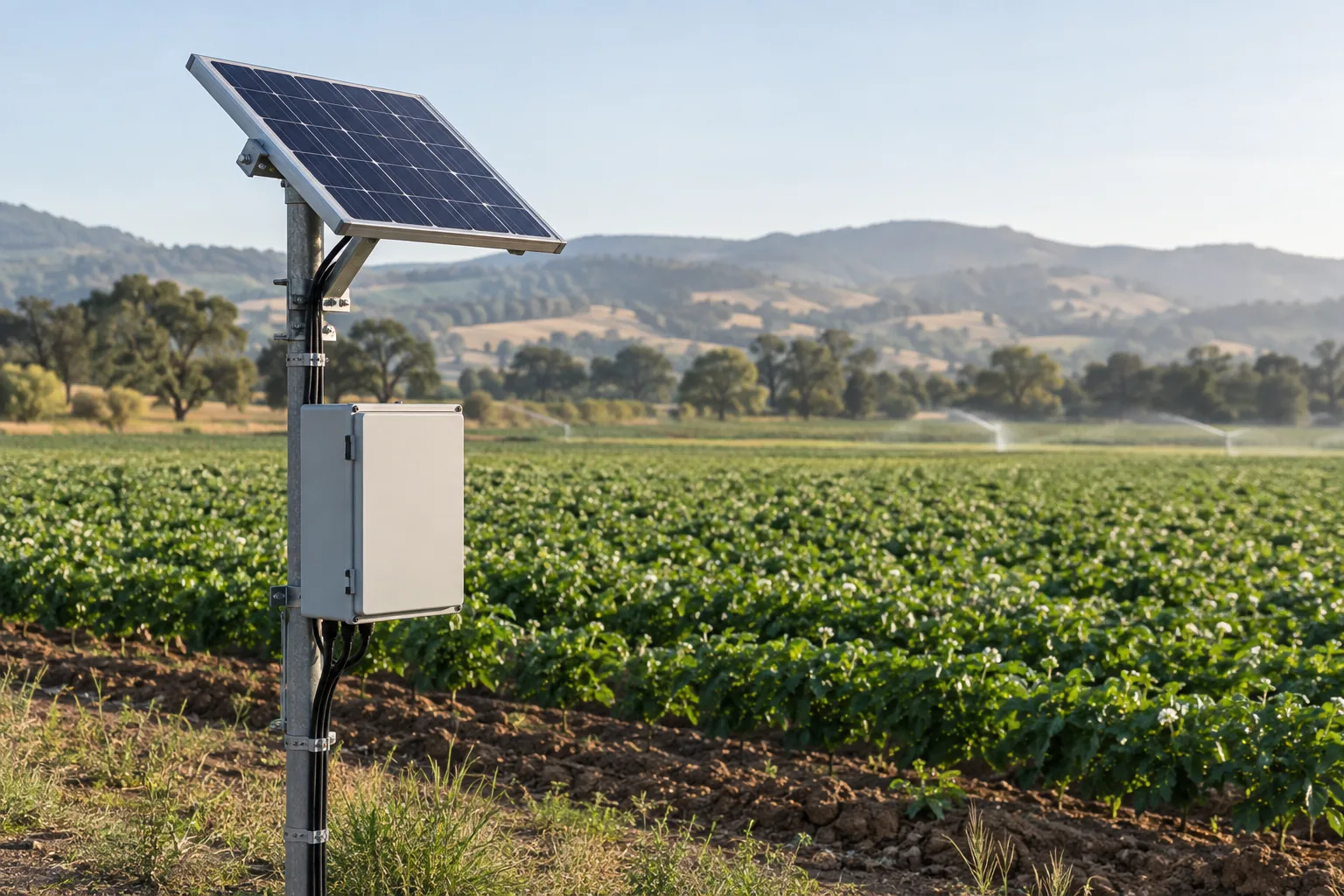
Useful for this connection
Size the complete station load
Use the final probe, logger, radio and duty cycle in the power calculation.
Keep rainfall records through a connection outage
Separate measurement time, rain-total period and upload time.
Choose soil positions before the dashboard
Keep installation depth and growing-zone identity with the readings.
Facts that determine the design
- What must be known between visits, and how often can the site be maintained?
- What power, shade, seasonal weather and mounting conditions are known?
- Which country, radio/network availability and reporting interval apply?
Equipment planning and a field trial
- A measurement and visit-interval brief for each farm point.
- A power and communication proposal based on the equipment load, coverage and sunlight at the site.
- A field pilot with battery/solar observations, missing-data checks and maintenance criteria.
Conditions to confirm
- Battery runtime and days without solar charging depend on the selected equipment, reporting interval and local conditions.
- Check radio reception, seasonal shading and sensor power consumption at the installation point.
- Local logging and recovery after a link outage are confirmed for the selected model and platform.
Equipment families to review
Soil and root-zone measurements
Selection and model-specific interfaces follow the agreed site requirements.
Agricultural weather
Selection and model-specific interfaces follow the agreed site requirements.
Discuss off-grid farm measurements.
A work email helps, but is not required. Unknown quantity is fine. A cabinet, panel or site photo is the most useful attachment.
- How often someone can visit.
- What must still be known between visits.
- Battery, solar, or still unknown.
- Country or region, for radio band later.
You can also email contact@sungeneiot.com. Same company as sungeneiot.com.
Common questions
Can the same station collect water, soil and weather readings?
The selected logger must support the actual sensor outputs, excitation and recording schedule. Compare the complete station load and channel requirements before combining measurements.
How often should an off-grid station report?
Agree how quickly an operator needs the information, then check measurement, logging and transmission separately. A longer radio interval does not automatically reduce the energy used by a continuously powered sensor.